
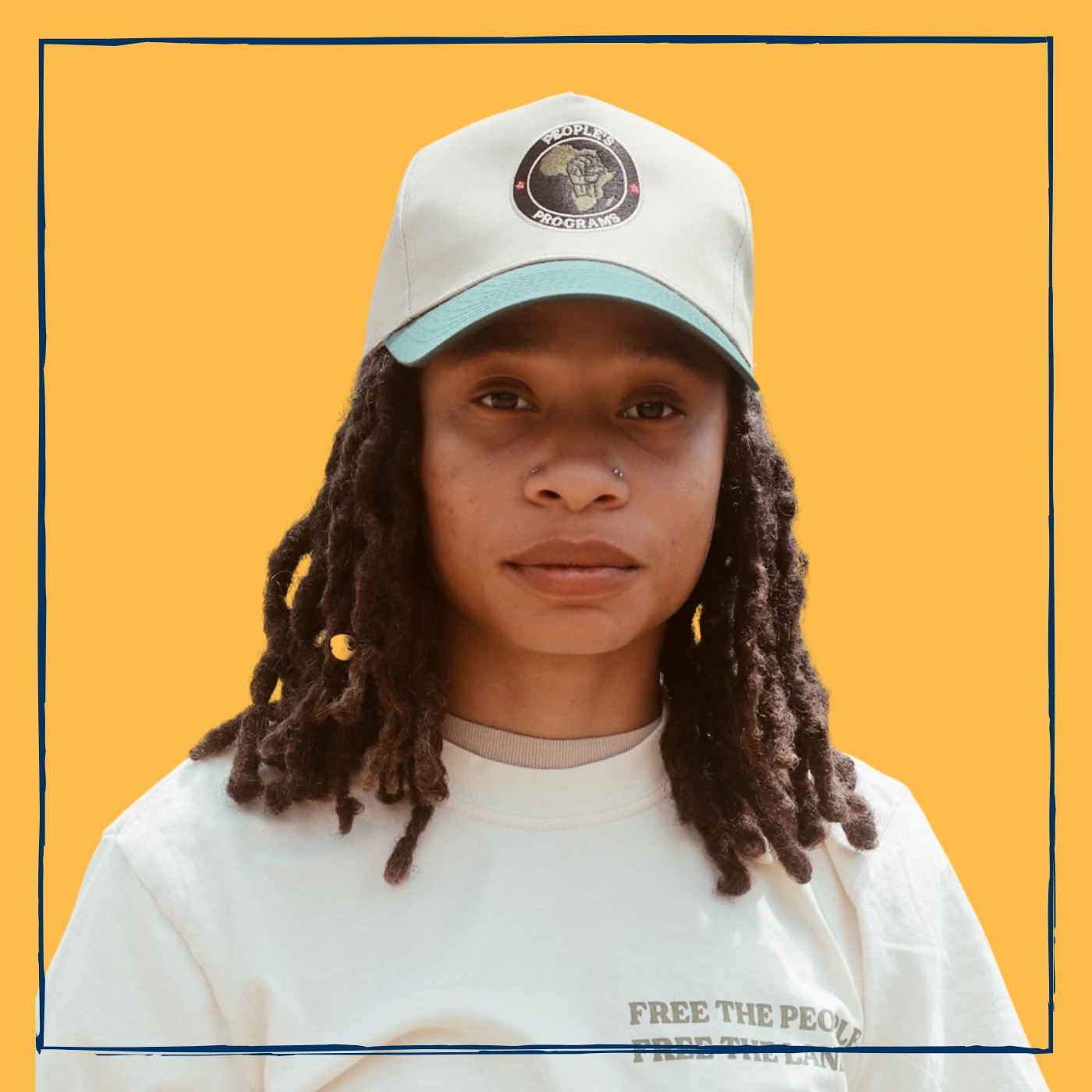
Leading People Series: Growing Food, Growing Community: ab banks on Leadership, Listening, and Food Justice
Leading People Series: Growing Food, Growing Community: ab banks on Leadership, Listening, and Food Justice
0:00 / --:--In this episode, we speak with ab banks, a leader at Oxford Tract Farms. ab works with the Berkeley Food Institute and on the ground with Berkeley Student Farms. An Oakland native, ab banks serves as garden lead for People’s Programs in West Oakland, grows food and ensures produce goes from the urban garden into the hands of under-resourced community members. ab was the first member to join People’s Programs. The People’s Garden was created to advance food autonomy for Black people in ab’s hometown and increase access to healthy food – including hot-meal deliveries for unhoused neighbors every Sunday and family grocery deliveries twice a month. With ab serving as garden lead, stewarding the land and harvesting crops, in 2022, the program distributed more than 800 pounds of produce to families and unhoused neighbors in West Oakland.
ab’s farming work is intertwined with wellness for people and the planet. In addition to leading the People’s Garden, ab started the (Free) Community Health Clinic, which opened in 2021 to address needs identified during weekly food delivery. ab is also the Agroecology and Wellness Coordinator at the Berkeley Food Institute (BFI). Here ab conducts participatory research on agroecology practices rooted in soil care and healing communities that have been generationally underestimated and silenced. BFI supports outreach, events, and academic opportunities at more than 10 urban gardens producing food and preserving native ecosystems. ab continues to learn, grow, and share their work in healing and meditation.
In 2022-2023, ab was a Just Leader Fellow with the Cooperative Food Empowerment Collective. Their work is aimed at a cooperative food economy powered by the visionary leadership of Queer, Trans, Black, Indigenous People of Color.
Episode Quotes:
Power of Listening
When you’re interacting with a lot of different people with a lot of different backgrounds, especially backgrounds that you aren’t familiar with, there will be a lot of listening involved. That is a key part of being a leader.
Community Resource
In the beginning of me coming to Oxford Tract and Berkeley Food Institute I had numerous conversations with different stakeholders like students, community members, and people we serve. All of the ideas that I have about the future are definitely linked to those initial conversations I had and ongoing conversations. So again listening to what people need from Oxford Tract. It boils down to my goal of being a resource for community members and the students.
Show Links:
- From the Field: The Vibrant Student Community at UC Berkeley’s Oxford Tract Farm
- BFI News: BFI’s ab banks Wins 2023 Maxwell/Hanrahan Award in Food
Transcript
Auto-generated from audio — may contain errors. Always trust the episode itself.
Welcome to Leading People, a special series on the here at Host.cast. I'm Reed Walters, a host MBA student and your host for this episode. Today we're joined by AB Banks. AB Banks is a leader at Oxford Trapped Songs. We'll talk about leadership at a very unique community organization. Let's jump into the conversation. Before we get started, do you mind just giving a quick intro and your background with love to hear a bit more before we start? And then I can go into some of the specific questions we sent over.
Yeah, of course. So, yeah, maybe I work at Oxford track currently. I work with Brigadier Food Institute and on the ground, with Brigadier Student Farms. Yeah, I've been a farmer for 10 years, primarily just farming, undergrad, I, once you see Berkeley myself, may not work with a bunch of students to get some stuff on campus, like the faintly hammer black resource center.
After that, I became the co-director of that center, and then after that farm full-time, did a bunch of different careers, but always came Yeah, right now I work with a couple of different community organizations, but then also again the students to get food free food, free produce to family's almost Oakland, but also students as the basic need centers. And yeah, that's a little bit about me.
Awesome. This is not on the interview question, but I'm just curious. Like, what do you love about farming and what kind of keeps bringing back to that?
Yeah, I think it's a great question. I think the main thing for me is it's just a great job to be, you know, having interactions with the soil, interactions with the land. But the big thing that brings me back is being able to feed people, particularly in this role. I get to feed people that need it for free. awesome part just being able to see people that, you know, wouldn't think of food as medicine to be able to provide healthy, clean, organic food to families and also students that really is like a driving factor and why I'm here and why I'm dedicated to this work here.
But, you know, food is super political. People don't have an access to food. I find one of uh one of the big problems plaguing our society and just being able to do that has been good for my mental health but also watching it be good for other people's mental health has been a cornerstone to my involvement.
Yeah, some of the like connection to the mission and the impact is it's important to you.
Yeah. Yeah.
Yeah. That's awesome. So I know that I am super interested in the food as medicine space and working in the healthcare industry. I'm just realized there's so much of a connection between like having access to healthy food and your health outcomes. And yeah, there's just so many interesting, like factors there. And there's so many interesting cultural factors around how people think about healthy food as well. So curious and could geek out with you, I'm sure. But we'll get into some of the kind of logistics that's the interview.
So again, part of our leading people class, we're just interviewing some different leaders and want to care about your perspective. I sent out where some questions, but want it to be a fee-flowing conversation. So if you have follow-ups for us or additional comments, feel free to add those in. Um, but I think our first question that we wanted to share your perspective on is, like, how you see your role as a leader and what strategies you've used to build trust.
Because I know the farm brings together a lot of different stakeholders with different cultural backgrounds and priorities and expectations potentially. So I'm curious how you see your role as a leader in that regard.
Yeah, so I think from where I sit, you know, just. making sure that the farm is operating and I think the biggest thing for me is exposing people to the tools that they need and giving people access to what they need and not assuming their access, I think a big part of leadership. These days, I see it as like people coming in thinking that they know all of the answers to whatever problem that they're trying to solve, but as a leader, I'm fully aware that people know what they need and I'm just exposing them to the access to get them where they need to go.
I think that obviously the people closest to the problem have truly have the answers and the closer you are to the problem, the more answers you have. So, you know, listening, engaging people and then also given them the resources that they need is my primary job and my primary role. And I think that as the leader, I'm just basically putting it all together and making sure that again that people And then, if I see any gaps, I can offer it, but not attach to people taking what I offer. It offering is just that, right, offering. So, just making sure that people feel comfortable in listening.
And then, there's a buffer time, I feel like as a leader, especially if you're new to a role, to do a lot of listening in a lot of, report building because like you say, when you're interacting with a lot of different people from a lot of different backgrounds, especially backgrounds that you're not familiar with, there's going to be a lot of listening involved in that is a key critical part to being a leader.
Yeah, that kind of trust-building phase is like so important. And I feel like I saw that as a teacher. I was like, you can't effectively teach people. And they're not going to listen to you. If you don't build that trust and kind of like share it understanding an alignment. And I'm kind of building on that. I'm curious how you leverage those different community experiences and use that to kind of inform what you do at the farm. and how you kind of keep people motivated as well to continue their engagement and to contribute.
It's like, yeah, I think it's the same answer. Honestly, just like the more you give people the access to what they're asking for, the more they'll be engaged and motivated to bring new ideas into trust that again, you're not coming in with the idea of what it should look like. You're coming in with just resources and then the people that are meant to be in the project will drive the project, you know, so like, it's almost like, you know, once you give somebody the ability and the trust, I think the trust is really important.
So do whatever they want to do, then they're pretty much motivated within themselves to continue the project and keep keep going. And I think, you know, a big part of being a leader is communicating and being able to communicate effectively looks like communicating for the sake of getting the information that you're trying to communicate across is not about how, you know, it's not about you getting it to them, the way you think you need to get it to them, but like listening here and how they like to receive things. and then giving them the information that you're trying to convey.
I find like a lot of times like maybe it'd be easier to just say how you feel and to, you know, not worry about how it lands, but how it lands is super important, especially as a leader. You want to make sure that, again, communicating the purpose of communicating is to to get an idea from your head to their head and if they're not able to receive it then, That is probably potentially a detrimental world block that will prevent communicating.
So communicating, giving resources, but also just listening because whatever it is that you're trying to convey has to be, you know, articulate and received well.
Yeah, and like tailoring your communication to the community or people that you're trying to work with. Yeah, that's that's helpful. And I'm curious and look here like a few examples of projects that you've worked with the community on and kind of what's been successful about that or leadership strategies you think kind of enabled that success.
Yeah, so this is kind of like an example I give all the time, but You know, as a farmer, you know, one of the big things is like, what are you going to actually farm? What are you going to actually give the families and students that you're trying to serve? And in the beginning of this project, we were just growing, you know, I think in Berkeley we have a very wide range of things you can grow because it's like we have such a, you know, good compliment.
Um, but one thing on an actual track that is hard for us to grow our leafy greens, um, but some certainly for greens do very well, so I'll give you an example. Yeah, it's like, same thing with chart, same thing with, um, just other, like, vegetables do really well, turn up beats, uh, radish. Um, but in the beginning, and again, we were just planning things that we know will be successful on the farm. And being open to the feedback of what we're growing was critical to us being able to provide these healthy foods to the families and the students.
So one example, again, bok choy, bring it back up. We were growing maybe 200 feet of bok choy, and some of the families that we were serving, called me up and said, hey, AB, not bok choy. It's no more bok choy. Like gay, you know, you know, you know, so think about cultural relevancy, right? We serve in West Oakland primarily black family. So she was like, AB, like, we don't know what bok choy is. Like we don't use bok choy. Like if we were to go to grocery store, what do we eat the first green and we pick up? And she was like, girl, girl collards.
Like, you know, she was like given us like examples of other greens and she even mentioned stuff that we wouldn't be able to grow. She was like, and grow fruit, like, mango. And you know, like, you know, like, we're gonna, yeah, we're gonna do that. a watermelon, you know, right? So things that they will actually enjoy. So I think as a leader, you know, this is totally egoless work, right? My purpose, my man, my primary purpose is to get healthy foods to these families and if they are not viving with the produce that we pick, then that will be food dumping, right?
So we had to definitely hit the drawing board our first year and have communication with the people that were serving like what do you actually want to eat right and I think that is a prime example of like being able to listen to the families and negotiate a little bit too right like hey listen you know we're not tropical enough to grow mango like I'm sorry, it's just not going to happen, but there's other things that they mentioned, like, collider and kale that we didn't even think about, that we started to do research on and figure out varieties that are good for Bay Area, right?
So specifically, watermelon, you know, we're like, okay, like, we can't grow strippers, right? That needs 100 days of 100 degree weather, but let's try these other watermelon that are successful in the Bay Area, like, so example, really delicious, really tasty, but, um, you know, is that negotiation piece right that we're like, okay, so like we understand that bok choy is not what you're looking for. So let's, let's look at college and you know, now, for example, we grow 400 feet of college because we know that the family's will eat it and love it and appreciate us actually.
And, you know, so that's the point right, you know, you don't want to just grow something on the farm that you know grow, it has to be a delicate balance between what can actually grow and what they'll actually eat, right? So, that's an example. Another example is we're working, you know, we work with like indigenous communities, and we were trying to grow three sisters. uh, corn being squash, um, and I've read about it, then research on it, but the way that it is traditionally grown is different than what is advertised or researched, um, at UC Berkeley or Davis for example, right?
So, bringing in elders and bringing in people that are, uh, actually doing this work and have been doing this work from millennia, right, to give us guidance on exactly how we could do some of these indigenous techniques, this indigenous technology, right? How can we implement them here in the Bay Area?
So just being able to listen, again, it always circles back to the listen somehow, but being able to really listen, it'd be like, okay, so yeah, Fun fact though, we go back to our game and some family actually are like able to, you know, look at some of the recipes that we're offering like, you know, just try, you know, we'll grow a significant less and offer it significantly less, but, you know, we'll still have a bunch of colors and care.
But, You know, that's the negotiation piece like once you build that rapport, then you can actually have conversations with the families because they see that we're listening right so we're offering tons of college and tons of care, but we're still offering bok choy with recipes and now they're like, okay, we'll try because we know that AB over is over there. It's really thinking about how to, you know, bridge that gap. So, um, that's just some examples that, you know, as a farmer, I think about.
And you know like I've been on other forms before we'll get feedback from the people we serve and it's like, well, this is all we can do like this is this is what grows well here, but again, what is the point of growing stuff for people that you're trying to serve if you're not going to listen to them when they say not this but this instead. Do you take, you know, do you struggle with that right, do you struggle with the land and the soil to try to provide those things or do you stick to your guns and be like, no, this is this will grows better.
We have a lot of problems with aphids with collards, but it's nothing that we can't, you know, continue to address. Because again, our number on priority is listening and providing what is export.
That's such a great, those are two great examples. I feel like I heard a lot in those answers, such as kind of going back to the broader goal of our goal is to get people food that they need. And if they're not using it, then that's not our general goal. So it's like, and then also kind of aligning stakeholders within the constraints of like, we can't make mango, but we can serve you in this other life. And then kind of bringing in experts as well. valuing their experience so that they're more in bond in on the overall mission. So that's incredible.
Kind of building on that like the need to be flexible and fluid. I'm curious about your like future vision for the farm and how you kind of see balancing the needs of those two holders with like some more practical aspects. I don't like funding and scaling the program.
Yeah, so I think again, it's just, you know, in the beginning of me coming to Oxford track and coming to Berkeley Food Institute, you know, I had numerous conversations with different stakeholders, like students, but also community members and then also the people we serve. And all of the ideas that I have about the future is definitely linked to some of those initial conversations that I had coming in and then ongoing conversations, right?
So again, just listening to what people need from Oxford Tract, because you know, I have a lot of visions of what, you know, urban agriculture looks like in the future, but It boils down to, again, my goal of being a resource for the community members and the students. So, some of my goals for the students is being able to get students careers and farming. And, you know, it's not always a lucrative position. So, trying to figure out what is the proper career path for students that they can actually have a career that is going to be able to sustain them. their future families, right?
So that's a little bit on the student side and what I've heard from students based off that is having the critical skills needed to actually have a lucrative career path inside a farming, right?
So think about, you know, not only having access to knowledge around like how do we harvest how do we plant how do we but also like some of these technical assistant careers right that yields like higher earnings or how can I be a farmer and you have higher earnings so helping them think about value added products like it costs you know you know you back by a pack of cucumber seeds for x amount of dollars you can sell those cucumbers for since on the dollar or you can make pickles right and then achieve, like, you know, some, you know, achieve some of these other pathways that will actually increase how much money you make as a farmer.
And then I'm also hearing, you know, just like, again, just like regular stuff, like, how do you network, right? So I'm hearing things like these from students, right? Also for community members thinking about the positionality of us being involved with Berkeley and being able to have access to tons of resources that community members wouldn't, you know, naturally have access to right being able to figure out a way to help that pipeline right help. get some of the community members from the resources that you see Berkeley has, and then same thing for families as well, right?
Families may do deliberately clear that what they need from us is produce, right? So keeping all those things in mind, For Oxford Track, what I see is developing a clear pathway for some of the students to be able to continue their work and agriculture continue their work in farming. However, that looks for them, however, they deemed best.
But then for the community members, at large, like other community farms and being able to provide the resources that we have for them in a digestible way, right, because I think one that, you know, you seem particularly has tons of resources, but I do think the biggest barrier has been communication. So being able to provide access to that. in a clear way, that's not like very hard to understand. Like some of the research coming out of UC Berkeley for example, even about urban agriculture like, Yeah, I'm going to read this.
Yeah. We appreciate your papers.
You're right. These white papers that you know. don't reach, you know, the communities that they are attending to serve, right? So a lot of it looks like some of these like very open, digestible workshops, you know, making it plain and simple. Some of the research that are coming out of UC Berkeley, but then other resources like, you know, helping farms get access to how to become, um, organic certified, right?
You know, even things like that where there's tons of resources out there for farmers, but again, there's just And then just also, in terms of that, making it a very high priority for me to produce as much food as I can, I actually try to continue to serve the families that we already serve and the students that we already serve, but to try to widen that to offer more food and more produce to these families. Those are like my three big vision points that I like when I sit down at the beginning of the year and I think about how to expand that.
Also not expanding too fast, right, because that also leads to a lot of problems that end up hindering your success. So, expanding here by year, thinking about things that are limiting, like that are barriers to where we want to go.
Um, so like I did example now is like we're thinking about how to put like a more of a classroom space on Oxford track so that Um, community members can come in, but then also students can come in and learn, um, on in the classroom in the classroom setting but on the farm right so having a place where people to sit just little things that I feel like people don't think about Um, our big big pieces for me that I know and understand to help people feel more comfortable on the farm to learn on the farm.
bringing in experts and giving them, you know, the free range to talk about their careers, but also making it again accessible, making even something like making the titles of the workshops not too heavy and, you know, like 25 words. Yeah.
Yeah.
technical assistance careers in organic agriculture like students are going to read that and be like I'm not going to that you're right or you know so funny I was talking to one of my students and she was like I don't know what technical assistance is and I was like and she was like I don't want to work on computers ABA and I was like Actually, you know, not one of this, right? I think it really computer work, right? Even though logistics are important, right?
So just being able to, again, just bring some of these things that are so like far in the air and bringing them down to earth to make them digestible and to communicate. I think it was circling back to communication. Because again, you know, those are my three big goals. So step by step, day by day, continuing to, to, you know, link up with the stakeholders to make sure that I'm on the right path.
And, and, and, and, and, and, and, and, and, and, and, and again, that I miss feedback only comes when you're willing to listen and, you're, you're, you're, you're, you're, you're, you're, you're, you're, you're, you're, you're, you're, you're, you're, you're, you're, you're, you're, you're, you're, you're, you're, you're, you're, you're, you're, you're, you're, you're, you're, you're, you're, you're, you're, you're, you're, you're, you're, you're, you're, you're, of writing, but then also in the process of building.
That's incredible. Really great, and examples of leadership. So thanks so much for your openness, too. It's been really wonderful to hear the experience. Yeah, I think I have like two last questions. The first one is kind of shifting gears a little bit into if you have like a people-related challenge or a challenge bringing together different communities or like an example of resistance to change.
I say the biggest thing is always going to be figuring out how to get people to communicate across cultures and I think that my stance on it is always just letting cultures and people present in being who they are, who they need to be right without.
Without discouraging that I think that that's been the hardest part for people to kind of grasp like hey We're bringing in you know for example, we're bringing in an indigenous permaculture to talk about three sisters You know you might have your way that you thought that three sisters will supposed to be but now these you know Indigenous elders are coming in there and they're sharing examples about how they know it's worked for a long time.
So kind of being able to shed some of that and be like, listen, this is their thing, you know, you might have a way that you've done it in the past, and that's okay. But at this time, we're listening to our Indigenous elders to try to implement three sisters in that way. It hasn't necessarily been a problem but definitely doing a lot of work to prep, you know, students and community members to make sure that they know that, hey, these people are coming in and as the expert, right? And of course, nobody likes to be called expert.
I don't think, I don't like to be called expert, even though people call me expert a lot, I'm like, no, no, no, that's not what's going on here. But, right, they're coming in as experts, right? To explain to us a long time. So that's the first thing, right? Being able to let cultures do their thing without saying, hey, but this, this, this, that I know or this, this, that I think I learned and, you know, being able to, like, let people be themselves and give and show up as their full selves.
A lot of that work is centered off of and around restorative justice and transformative justice and nonviolent communication. And I think those are the three big things that I like to try to lead with in any scenario, even if it's not a conflict, right? Even if it's just an indigenous elder coming in and sharing what they know that you don't come off the wrong way.
You know, those, all of those like trainings that we do about, you know, nonviolent community, I don't actually don't think the university offers nonviolent communication training, but it's something that we offer at the farm, right? Because again, it's just a lot of cultures coming together to try to make Oxford track happen. You know, we have a lot of different people coming from a lot of different backgrounds.
And, I think a, you know, a lot of times when people hear something different than what they know, they get defensive or they, you know, a lot of times they leave with their ego because it's like, oh, what you do like this decide to it, you know, um, but. I say, that's the biggest challenge being able to let people, the cultures mesh together without it being like, this is my culture. This is the way it is that cannot happen in the instance where there's like four or five different cultures coming together, right?
We're all planning cucumber, but you're planning, this cucumber and we're a planning cucumber and this cucumber grows like this. And our cucumbers grow like that. And people are like, well, this is how you grow cucumber and it's like, well, not necessarily this cucumber, right? making sure that things happen different and people do things differently and that is perfectly fine and without that it would not be able, we would not be able to have diversity right. So I think the big three things, that we lead with our TJ and RJ, but then also NVC and I ride the communication.
And when things arise when conflict arise, I think the biggest thing, we kind of like, like conflict on the farm, because conflict gets such a bad rep, but conflict is just needs on both sides and I being met, right? So if you can figure out what those needs are, that are happening, that are landing, in a weird way for each other, then we can build a bridge, and that is always most impactful. But it always boils down to, hey, this is how I'm all about to do it, it's different than your culture problem. Question mark, no, not problem.
This is good, let's keep the conversation going and let's let people be in do what they need to do. With set community agreements, already, right? So we not just let people do whatever, right? You just, you just make sure that people have the container to be who they need to be.
Yeah, I resonate with so much of that for my experiences. The teacher teaching like a very diverse group of students, I feel like that.
We used a lot of restorative justice practices in the like community agreements and community, like meetings and community building and it's so important to set the kind of ground rules on how we talk to each other and how we value experiences almost like proactively ahead of the conflict so that when the conflict does arise it's like okay we have these shared agreements a shared mission and goal and then we can kind of work through it together so yeah thank you for sharing.
I think another thing out when you said that Yeah, I mean, I mentioned it, but like we want the conflict to arise. We want it to come to the head, right? We don't. A really big thing is practicing being able to say how you feel without pushing it under the rug because that's when it festers. So like when things arise, we try to do our best at the farm so we'll be encouraged them to come up.
and not in lean into that conflict right because without that conflict then we'll never be able to understand each other and you know thinking about conflict in that light right where it's not a bad thing right it's just again needs on both sides not being met so how can we address it in a way that everybody feels heard and the things that are like you know maybe you don't need this to feel safe in this environment and this thing that you don't need is directly going and hindering somebody else's ability to show up. Can you shut that so that we can come together easier? Um, and better.
So that came up for me. Like, I feel like some in some spaces I've been in, it's been like, you know, conflict, conflict avoided it. And there's no space in farming in, in that actual track for it to avoid that. So we have to, we're almost like, yeah, it's coming up great. Let's talk about it. Let's, let's get, let's get on the same page. What is it exactly, you know, helping people identify their emotions?
I think it's such a are able to articulate what it is that they're filling in why and being able to investigate that is a lot of self, involves a lot of self discovery that's helpful but then also a lot of community and cultural discovery that I feel like only does good for the farm in the long run.
Yeah, when we like we don't have time for a cough like to fester, you know, like we are like Um, I think those were our like primary questions. I guess last question I've heard, like so many different leadership components that you've mentioned, like listening, kind of the importance of honest feedback. This learners mindset. I'm curious if you have any other advice based on your experience for groups or leaders that are trying to work with the diverse group towards a shared goal. There's any other leadership components you want to mention.
I think one thing, I don't see how to, I think one thing is to, it's like, when you're, when you're doing something with a group of people, just being clear why, why are we doing this? Because at the end of the day, if people are really dedicated to the why, then as much easier for folks to come in, egoless, come in, open, right? So like, say we're farming, right? We're very clear at the farm that we're farming to feed people for free. That is it. That is what we're doing and that's why we all come together.
So, and then we're also, you know, we have, like, these, you know, subcomonents, right? Like, we really value cultural relevancy, we really value making sure that people have access to the food that is either local or culturally relevant to them, right? So that way, again, when conflict arise and when things happen and when this confusion, even if there's no conflict right where we're just like, should we do this project or should we work with this organization or should we do this workshop? If it's not aligned with what we're doing, then it's a simple realignment that happens.
as all the stakeholders are involved, right? And I see this a lot too like in spaces where it's like, you know, something will come up and it has nothing to do with the why and it's much easier to deal with that when you put the at the forefront why you're doing whatever you're doing. So again, we're feeding people and then something comes up around, I don't know, something that happened, and again, it has a super interpersonal. And we can just realign what, well, you know, we're not doing this for personal reasons. We're doing this for the greater good of serving, you know, 170 families.
Like, you know, when you really weigh in on the the significance, right? And then I think another thing is like, a lot of people come to the farm and they're like, hey, you know, I'm doing this for fun. And it's great, it is fun, it's fun, it's great work. But again, we're serving 170 families that the gravity of that, I think, really aligns people automatically, like. So if we're coming to the farm and people, you know, They don't want to work or they don't want to turn around. Yeah, you know, messing around.
You know, it's real easy to to bring people back because it's like, hey, listen, we serve. Thousands of students at the basic needs center every week. We serve 170 families, families. bigger than five people to each family right. We started with a lot of people so it's really easy to call people in and call people back from that because they're like, oh, yeah, this has nothing to do with me. Nothing to do with my bad day. Nothing to do with me into my interpersonal relationship with the next farmer.
We're having the gravity of the situation is much heavier than some of the little spats or the disagreements or anything that arise. So I think that is a really important thing when you think about being a leader, making sure that everybody that you're working with is aligned on the why. And if not, then that's the kind of the first step of what you need to address in and kind of get solid on. And once you get solid on that and everybody's in the agreement, that that's what you're doing it for.
It's much easier to deal with anything that comes up, whether it's conflict or it's in a personal conflict or it's just what are we going to grow, right? Well, that's actually people we serve, you know, or I want to grow this. Oh, you want to grow this, but do the people that we serve for them. to eat this, right? Not so you can have the great to see what.
It's like, yeah, people can have the food they need.
Yeah, it's not, it's not, you know, the gravity is always heavier, your personal spat or your personal ideology, you know, always much lighter than the gravity of feeding that many people and depending, depending on the produce, right? So I think sometimes, you know, things can come up, things are rise. But when we sit down and we align on what we're here for and what we're doing, it all kind of just shakes out.
As has been such a great conversation and you've touched on, I think our professor, all of the topics are professor has talked about. So I am very, it's incredible. So thank you so much for for sharing your perspective and your experience. It's just like such a cool organization and really glad that we got the chance to chat with you. Thank you for listening to Leading People on the Here at House podcast. If you enjoyed this conversation, please follow and subscribe so you don't miss upcoming episodes.
This series is produced by students in Professor Don Moore's Leading People Class at UC Berkeley Hospital in partnership with University FM. Until next time, go Bears!
Curious how this connects to other episodes? Ask the Archive — our AI guide answers across every conversation, with links back to the source.
More to listen to

Leading People Series: Investing in Leadership: Lessons from Ana Carolina Mexia, Co-Founder of Nido Ventures
On this episode of the Here@Haas podcast, we sit down with Ana Carolina “Caro” Mexia, Co-Founding Partner at Nido Ventures and Forbes 30 Under 30 honoree. Born and raised in Mexico City, Caro blends her roots in computer science and prod…
Leading People Series: People First, Growth Always: Leadership Lessons on Culture, Feedback, and Scaling Organizations
On this episode of the Here@Haas podcast, meet Dave Alberga, a former Army officer and successful founder, CEO, and investor who sits on several boards. Dave has assisted in the launch of numerous start-up organizations and in their grow…

Leading People Series: Trailer
In the Leading People class at UC Berkeley’s Haas School of Business, students step beyond the classroom to interview leaders who inspire them. Working in teams, they record in-depth conversations and transform them into compelling podca…